Expert's opinion
The article is a subjective view on this topic written by writers specializing in medical writing.
It may reflect on a personal journey surrounding struggles with an illness or medical condition, involve product comparisons, diet considerations, or other health-related opinions.
Although the view is entirely that of the writer, it is based on academic experiences and scientific research they have conducted; it is fact-checked by a team of degreed medical experts, and validated by sources attached to the article.
The numbers in parenthesis (1,2,3) will take you to clickable links to related scientific papers.
Best Prenatal Vitamins 2024: Top 8 Brands For Pregnancy

Updated on
- Written by Lisandra Fields, Health Writer
Medically reviewed by
Kathy Shattler, MS, RDN
All articles are produced independently. When you click our links for purchasing products, we earn an affiliate commission. Learn more about how we earn revenue by reading our advertise disclaimer.
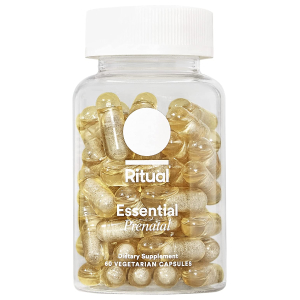
Ritual Prenatal Multivitamin
- An enjoyable experience with the noteworthy citrus
- It’s a reasonably price ($30 each container)
- Utilized science-based ingredients

Care/of Prenatal
- They don’t incorporate controversial additives into their capsules
- 100% vegetarian, gluten-free, and sugar-free
- They’re incredibly soft on the stomach
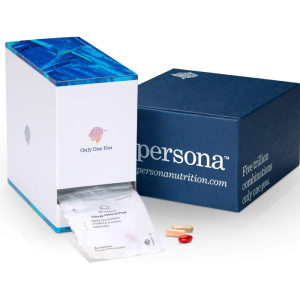
Persona Prenatal Vitamin
- The ginger in each capsule is a unique addition that helps alleviate nausea and morning sickness
- Contains all of the eight B vitamins
- Offers three packs: the Morning, Evening, and Bedtime Packs
A prenatal vitamin is a processed supplement that contains all of the recommended minerals and vitamins to ensure a healthy pregnancy. The levels of both minerals and vitamins are appropriate for those trying to conceive, those who are pregnant, and those who are breastfeeding.
Each prenatal vitamin contains a dose of essential nutrients, including folic acid or folate, choline, iron, Vitamin D, and calcium. It’s almost impossible to find all these nutrients in the levels needed from a single diet; that’s why a prenatal vitamin is more than necessary.
As with all multivitamins, prenatal supplements come in different forms, including liquids, gummies, soft gels, and capsules. Each type has its good side and its bad side. Gummies, for instance, have a good taste and are easier to ingest, but they’re iron deficient.
A high-quality OTC (over-the-counter) supplement could be equally effective as a prescription alternative based on your average nutritional requirements. It’s advisable for women to try out different supplements before settling for the one that doesn’t have adverse effects like constipation or nausea.
Best Prenatal Vitamins On The Market In (April. 2024)
- Ritual Prenatal Multivitamin – Editor’s Choice
- Care/of Prenatal – Best Organic
- Persona Prenatal Vitamin – Best for Morning Sickness
- Future Kind+ Vegan Prenatal Multivitamin – Best Option
- Beli Prenatal Multivitamin – Best Fertility Boosters for Men and Women
- Mama Bird AM/PM Prenatal Multi+ – Best for Methylated Folate
- Garden of Life Prenatal Multi – Best Gummy
- Nature Made Prenatal Multivitamin – Best Overall
- Pink Stork Total Prenatal Vitamin – Best Liquid Vitamin
When Do You Need Prenatal Vitamins?
The best time to start incorporating prenatal supplements is before conception for all women of childbearing age, not on birth control. The folate content greatly lowers the risks of neural tube conditions such as spina bifida.
A fetus’s neural tube develops into the spinal cord and the brain within the first month of pregnancy. Spine formation in the womb occurs even before you notice you’re expectant. Thus, folate is essential for the baby’s neural tube development.
That’s why most specialists recommend that you start taking supplements as soon as you notice you’re pregnant. Others will recommend that you begin consumption at least a month or two before pregnancy. A study[1] from 2016 showed that a whopping 45 percent of pregnancies within the US are unintended.
Taking prenatal vitamins at least three months before pregnancy will prevent a host of problems such as preterm labor, congenital defects, miscarriages, and so on. Keep taking prenatal vitamins post-delivery, more specifically when breastfeeding.
You don’t need to take prenatal vitamins if you’re not expectant and you’re on birth control.
When To Start Taking Prenatal Vitamins?
If you’re pregnant, it’s not too late to start taking prenatal vitamins. However, it’s strongly recommended that you begin taking prenatal vitamins the moment you find out you’re expecting to provide important vitamins for good nutrition for a healthy pregnancy.
Pregnant women require a relatively higher amount of vitamins and minerals as they support their developing fetus.
There’s no specific time of day for taking prenatal vitamins. When you remember to take your vitamins, simply do it without fail.
Your body will still absorb all the nutrients from the supplements regardless of when you take them. However, for optimum absorption with the least side effects, take it with a meal[2].
The 8 Best Prenatal Vitamins for Pregnancy
Ritual Prenatal Multivitamin
For those who obsess about how clean and potent their supplements are, this vegan prenatal multivitamin from Ritual is one of the best options.
- Promotes brain health via these key nutrients: folate, choline, and Omega-3 DHA
- Vegan, gluten-free, non-GMO
- Promotes bone support through its Magnesium, K2, and D3 content
- Fairly easy to digest, and swallow
- Zero synthetic ingredients
- Extravagantly expensive compared to most other brands
- They’re a subscription service, meaning that you need to wait until the next month if your supply runs out.
Ritual supplements were established by Katerina Schneider. It began with a couple of dietary supplements and later on expanded to incorporate vitamins for kids, teens, women, and men.
With Ritual prenatal vitamins, you’re assured of almost-instant results. This is due to the highest quality of traceable ingredients in each capsule.
They’re regarded as ‘traceable’ because the manufacturers can share their suppliers, the kinds of nutrient forms they use, the dosages, and other important information you may want to know.
Ritual Vitamins are void of all nine allergens. They’re also 100% vegan and gluten-free.
Care/of Prenatal
Care/Of Prenatal gives you special capsules complete with 22 key nutrients that will benefit you and your unborn baby.
- Promotes easy digestion with its organic yeast content and unique design
- Highly convenient services
- Fairly convenient services
- Each capsule contains a naturally occurring folate, e.g., methylfolate
- Their health claims may be[3] unreliable or misleading
- Inaccurate shipping and orders
Care/Of is a splendid option for ladies who want a personalized nutrient plan. Prior to gaining access to their services, Care/Of will present you with a fun and relatively interactive quiz that they’ll use to draft vitamin pill packs specifically for you.
Unlike other prenatal vitamins, Care/Of gives you special capsules complete with 22 key nutrients that will benefit you and your unborn baby. Trustpilot gives Care/Of an impressive 4.6 out of 5 stars.
The moment you place an order of Care/Of Vitamins, you get 30 days’ worth of supplements. Care/Of understands that their products are not scientifically proven, and they try to be as open as possible about it to their customers.
Persona Prenatal Vitamin
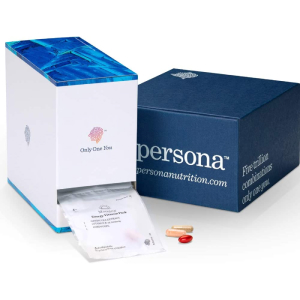
The Persona Prenatal Vitamin is designed to cater to all your health needs. The organic ginger content helps to relieve your nausea.
- Certified nutritionists are always on call to answer your queries
- The organic ginger content helps to relieve your nausea
- Zero animal testing
- Gluten-free, non-GMO
- Programs are 100% customizable
- Zero artificial colors and chemical-based fillers
- No third-party testing
- Eight Better Business[4] Bureau Complaints in the past three years
Persona was established in 2016 and had an exceptional 4.3 out of 5 stars rating on TrustPilot. The Persona vitamin pack is designed to cater to all your health needs. The team behind this extraordinary supplement is strongly determined to promote good health and well-being for anyone who uses their products.
Persona is founded on four core values: Education, Care, Personalization, and Transparency. Persona Nutrition frees you from the stress and confusion that comes with buying prenatal vitamins.
They do the research, the sourcing, the packaging and oversee the delivery to your doorstep. The best part about their packaging is how personal they are. They may include a handwritten note along with other heartwarming gestures.
Future Kind+ Vegan Prenatal Vitamin
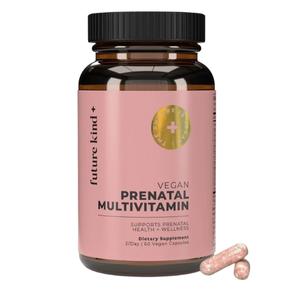
Future Kind Vegan Prenatal Vitamin is an excellent choice for everyone who has a sensitive digestive tract and struggles with the absorption of nutrients.
- Contains L-Methylfolate, a superior form of folate
- Comes in a sustainable packaging
- 11 essential pre, during, and post-natal ingredients
- Mostly available online
- Have to take two vegetable caps for a serving
If you’re looking for a vegan prenatal vitamin that will be as highly absorbable as possible, Future Kind might be the best option for you. Their formula contains a superior form of folate, L-Methylfolate[5], that’s easier to absorb and even helps reduce the symptoms of depression.
Created after the founder’s wife couldn’t find a high-quality prenatal vitamin that would support her plant-based lifestyle, it contains all the best nutrients needed to support pregnancy, conception, and lactation.
The formula contains vitamin D3, vitamin E, folate, Vitamin B12, biotin, iron, iodine, zinc, magnesium, choline, and omega-3 fatty acid Docosahexaenoic Acid (DHA) coming from algae. Additionally, this supplement comes in a recyclable, eco-friendly glass bottle, and the company ensures all deliveries are carbon neutral.
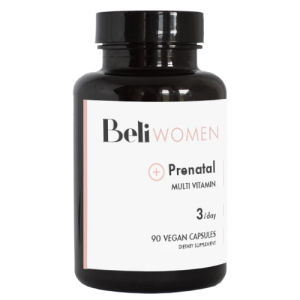
Beli Prenatal Multivitamin
15% Off Coupon: HEALTHCANAL
Both men and women can benefit from Beli prenatal vitamins. It can be used before, during, and after pregnancy and are gentle on the stomach.
- Overwhelming positive online reviews
- Free shipping within the US
- Both men and women can benefit from pre-and post-natal vitamins
- Keto-friendly, gluten-free, allergen-free, soy-free, vegan, and non-GMO
- 30-day money-back guarantee on the first month’s purchase
- Do not ship outside the US
- Can only be bought via the brand’s online store
Beli vitamin supplements may help improve fertility, embryo development, and the formation of the baby’s central nervous system in women.
The Belibaby pills are designed to be easily digestible and have a minty smell to keep new moms from feeling nauseated. High-quality iron, methylation folate, B vitamins, and TRAACS minerals are all included. All of these substances are good for your stomach.
Choline, essential for a baby’s brain and spinal cord development, is the key element in Belibaby women’s formula. Folate, magnesium, iron, and zinc are among the other components.
The flagship ingredient in the Belibaby for Men mix is shilajit, an adaptogen demonstrated to boost sperm count and overall sperm quality. Zinc, vitamin D, vitamin E, and folate are among the nutrients found in this keto-friendly, gluten-free, allergen-free, vegan, non-GMO vitamin.
Mama Bird AM/PM Prenatal Multi+
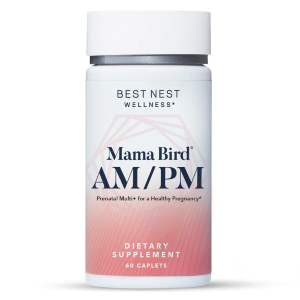
Mama Bird AM/PM Prenatal Multi+ contains a high vitamin concentration and is the best organic, vegan-friendly prenatal vitamin.
- Extensively researched
- Extremely easy to digest
- Attractive scent
- No discernible taste
- Contains a high vitamin concentration
- Considerably expensive compared to most other brands
You’ve probably bumped into this brand plenty of times in the supermarket or pharmacy. Mama Bird is the best organic, vegan-friendly prenatal vitamin alternative for consumers who don’t want anything fancy or costly.
Mama Bird Prenatal Multi+ contains an impressive variety of pro-vegan nutrients in a single dosage. It’s composed of ingredients such as calcium, iodine, iron, zinc, choline, and a wide host of vitamins, including Vitamin A, B12, D, and D3. When nutrients are in the right amounts, prenatal multivitamins are essential for a healthy baby and mom.
The rich blend of probiotics, pregnancy-friendly botanicals, and digestive enzymes set it aside from the rest. All these work together to alleviate nausea symptoms.
Another reason to buy a bottle of Mama Bird is its methyl folate content. It’s a type of folic acid in naturally occurring form and of higher bioavailability (7x that of folic acid[6]) than synthetic folic acid. It is packed in dosages of 600 mcg in each pill.
Garden of Life Prenatal Multi
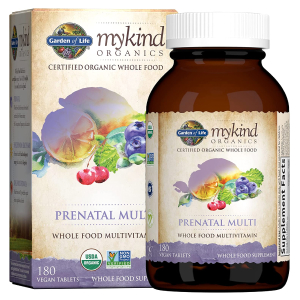
Garden Of Life Prenatal Multi can prevent nausea and is perfect for ladies with diet restrictions or allergies.
- Superb list of ingredients (folate, Vitamin D3, C, K, Zinc, Calcium, etc.)
- Offers 30-day money-back guarantee
- Prevents nausea with a special combination of peppermint and ginger
- Zero artificial preservatives
- Excellent customer support
- Exceptional taste
- You need to take a gummy thrice a day, which may be a problem to remember
- Fairly expensive
Garden of life contains a total of 27 whole-food ingredients. Each nutrient is fully vegetarian, gluten-free, and dairy-free. This prenatal vitamin is perfect for ladies with diet restrictions or allergies.
Garden of Life is great, but it still lacks some vital vitamins (e.g., choline) that are common among other prenatal vitamins. This makes it crucial for the pregnant woman to continue with a balanced diet full of calcium-rich foods if she chooses this daily prenatal vitamin.
Each bottle of Garden of Life Raw Prenatal contains 180 gummies. You don’t have to worry about consuming Genetically Modified Organisms (GMOs) or toxins since all the ingredients are certified organic. Garden of Life’s prenatal formula is perfect for ladies who are trying to conceive or breastfeed their newborn.
Garden of Life doesn’t cause that annoying stomach upset that’s associated with most other varieties.
Nature Made Prenatal Multivitamin
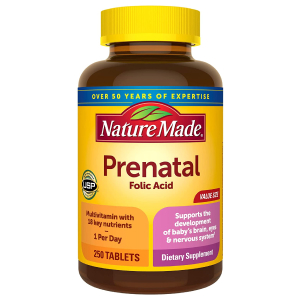
Nature Made Prenatal Multivitamin contains a wide variety of vitamins, incorporates DHA and other high-quality ingredients.
- Widely available in most grocery shops
- Contains zero preservatives, flavors, and artificial colors
- Reasonably priced
- Wide variety of vitamins
- Easy to swallow
- Attractive packaging
- Only available in most parts of the US
Nature-made is one of the best prenatal vitamins with Docosahexaenoic Acid( DHA). It’s a fairly affordable brand that incorporates DHA (a type of healthy fat found in salmon, cod, and other types of fish) with a host of other essential ingredients like iron, folic acid, and all the eight B vitamins, as well as the fat-soluble vitamins.
This unique combination of high-quality ingredients works together to give the best in terms of prenatal care.
If you pass up seafood meals often for fear of throwing up or fear of feeling nauseous, Nature Made Prenatal is just for you. A single bottle contains 90 soft gels, which are fully packed with high folic acid and the recommended 200 milligrams of DHA. The high DHA content helps in brain development.
Their simple form also makes them easy to swallow and digest. What’s more, they don’t have the same fishy taste as most prenatal vitamins with DHA.
Pink Stork Total Prenatal Vitamin
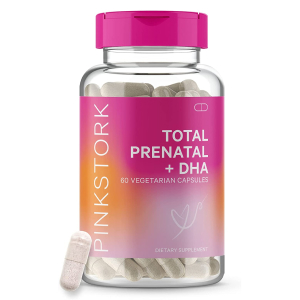
Pink Stork Total Prenatal Vitamin is a liquid prenatal supplement that contains high-quality ingredients. Also, it can help with nausea.
- High-quality ingredients
- Helps with nausea and morning sickness
- Non-GMO and gluten-friendly
- Vegan-friendly
- Tested by third-party labs
- The rich iron content gives it a metallic taste
And finally, we have Pink Stork. If you’re not so much into tablet prenatal, try out a liquid prenatal supplement instead. What better option than Pink Stork?
You can consume it on its own, or you could add it to a juice or soft drink. We recommend the latter since it has a fairly strong taste when taken on its own.
Similar to all the ingredients on this list, Pink Stork offers all the critical nutrients needed for a healthy pregnancy. In fact, it promises the complete daily requirements of the most essential nutrients.
Pink Stork is vegan-friendly, gluten-free, and non-GMO. The brand claims the iron content in this supplement is non-constipating.
How To Choose The Best Prenatal Pills?
Ingredients
This should be the first and most important feature to look out for when purchasing prenatal vitamins. Seek out a prenatal vitamin that contains iron (18 milligrams) and folic acid of approximately 600 and 800 micrograms.
The RDA (Recommended Dietary Allowance) for iron for expectant mothers stands at 27 milligrams. You’re more likely to meet your needs faster if you take iron-rich foods and supplement them with a high-quality prenatal vitamin.
Types of Pills
Prenatal vitamins come in four forms: liquids, gummies, capsules, and tablets. Be clear on the dosage before deciding which one’s best for you. Keep in mind that the one you pick will be the only kind you take for the whole month.
It’s important to note that gummies (and other vitamins) don’t often include all the critical elements that are needed to see you through your pregnancy. That means you need to go for liquid or tablet prenatal vitamins for the full effect.
Third-Party Testing
Since the Food and Drug Administration (FDA) has zero control over vitamin content, it’s difficult to determine the accuracy of the ingredients promoted by different companies.
One of the best ways to ensure the prenatal vitamins you’ve purchased are worth your buck is to check if the firm conducts third-party testing.
Third-party verification assurances show that a company is sure of its doses and contents. They shouldn’t mind if further research is done on them in such a case.
Cost
Most ladies might go for a highly-priced supplement with the assurance that they’re spending on a high-quality product. Unfortunately, that’s not always the case.
Sometimes, generic brands are just as good as popular kinds. If you really have to go for the costly kinds, ensure you have insurance that will cater to the hefty costs.
What Ingredients Are Included in Prenatal Vitamins?
Iron
Iron is critical for the healthy development of the fetus and the placenta. It also helps in multiplying the number of red blood cells in the mother. Expectant mothers should take approximately 30 milligrams[7] per day of iron supplements to stave off iron-deficiency anemia.
Folic Acid
Folic acid plays a critical role in the development of the fetus’ brain and spinal cord, and it also helps to keep it safe from neural tube defects—the CDC advocates for the consumption of 400 micrograms[8] of folic acid among expectant women. Folic acid is also necessary for the formation of healthy red blood cells and for the prevention of anemia.
By taking methylated folate, you may bypass the enzymatic defect in processing folic acid and thus avoid associated birth defects and have a better pregnancy outcome.
Methylated folate is the natural form of folate found in foods, whereas folic acid is synthetic, and both forms are found in prenatal nutrients.
Vitamin D and Calcium
These two ingredients are essential in the formation of the fetus’ skeleton. Pregnant and lactating women should have about 800 milligrams[9] of calcium per day for healthy bone development.
This amount should satisfy the needs of 50% of this population. The National Academy of Sciences recommends 1,000 mg of calcium per day for pregnant or lactating women.
Pregnant or lactating women should get 600 IUs[10] or 15 micrograms of Vitamin D per day.
Iodine
Iodine aids in the functioning and development of the thyroid gland, and iodine deficiency may trigger hyperthyroidism in the baby or the mother. Pregnant or breastfeeding women should take[11] daily doses of iodine ranging between 220 and 290 mcg.
Zinc
A zinc deficiency often leads to slow growth, and a healthy supply of this nutrient aids in the normal development of your baby and increases its birth weight.
Pregnant moms need 11 mg, and breastfeeding moms need 12 mg of zinc per day to protect the fetus’ or infant’s cognitive, physical, and immune development.
Vitamin A
Vitamin A ensures normal eye development, and a deficiency of this nutrient often leads to night blindness. Pregnant women must consume at least 770 mcg of Vitamin A every day.
Other compounds to consider in a prenatal vitamin include Vitamin B12, docosahexaenoic acid (DHA), and omega-3 fatty acids. Your obstetrician-gynecologist (OB/GYN) should advise you on the way forward and recommend a suitable vitamin preparation.
Final Thought
Taking prenatal vitamins may increase[12] fertility and boost egg quality. There are a lot to learn about them and huge decisions to make, but picking a quality prenatal vitamin should be your topmost priority.
Prenatal supplements should in no way replace a healthy diet. They only ensure that you and the unborn baby are getting that extra vitamin boost for conventional growth and development. If you’re not sure what prenatal vitamin you should take, stay in constant communication with your doctor.
Frequently Asked Questions
As soon as you confirm your pregnancy. Since the first few weeks are critical for your fetus’s development and well-being, you need to supplement your diet with prenatal vitamins for all-around nutrition. It is wise for all women of childbearing age to take a prenatal multivitamin if they are not on birth control.
There’s no specific time for taking prenatal vitamins. Take them whenever you feel it’s convenient. If you get regular rounds of morning sickness, take the vitamins after a meal or later in the day. For optimum absorption and minimal side effects, however, take it with a meal.
Whether or not you eat healthily, prenatal vitamins should be an integral part of your diet. They help you to stay well-nourished and ensure the well-being of your growing fetus. It’s worth noting that it’s still important to eat healthily and mindfully throughout the course of your pregnancy.
Prenatal vitamins come in various forms and sizes. If you take the tablet form and you get stomach distress from it, try chewable or liquid supplements instead. However, since gummies are significantly deficient in iron, a vital nutrient, you may need additional supplementation.
+ 11 sources
Health Canal avoids using tertiary references. We have strict sourcing guidelines and rely on peer-reviewed studies, academic researches from medical associations and institutions. To ensure the accuracy of articles in Health Canal, you can read more about the editorial process here
- Anon, (2022). Unintended Pregnancy. [online] Available at: https://www.cdc.gov/reproductivehealth/contraception/unintendedpregnancy/index.htm.
- fenneld (2021). The Best Time to Take Vitamins. [online] Cleveland Clinic. Available at: https://health.clevelandclinic.org/the-best-time-to-take-vitamins/.
- Statement of Gregory Kutz, Managing Director Forensic Audits and Special Investigations ,(2006),NUTRIGENETIC TESTING Tests Purchased from Four Web Sites Mislead Consumers. Available at: https://www.gao.gov/assets/gao-06-977t.pdf
- Bbb.org. (2013). Persona Doctors. [online] Available at: https://www.bbb.org/us/va/woodbridge/profile/medical-doctor/persona-doctors-0241-236000948.
- Greenberg, J.A. and Bell, S.J. (2011). Multivitamin Supplementation During Pregnancy: Emphasis on Folic Acid and l-Methylfolate. Reviews in obstetrics & gynecology, [online] 4(3-4), pp.126–7. Available at: https://www.ncbi.nlm.nih.gov/pmc/articles/PMC3250974/.
- L-METHYLFOLATE THERAPEUTICS Brands • Deplin see index for additional brand names Generic? No Commonly Prescribed for. (n.d.). [online] Available at: http://cdn.neiglobal.com/content/blog/l-methylfolate.pdf.
- US), M. (2022). Iron Nutrition During Pregnancy. [online] Nih.gov. Available at: https://www.ncbi.nlm.nih.gov/books/NBK235217/.
- CDC (2022). Folic Acid. [online] Centers for Disease Control and Prevention. Available at: https://www.cdc.gov/ncbddd/folicacid/about.html.
- Willemse, J.P.M.M., Meertens, L.J.E., Scheepers, H.C.J., Achten, N.M.J., Eussen, S.J., van Dongen, M.C. and Smits, L.J.M. (2019). Calcium intake from diet and supplement use during early pregnancy: the Expect study I. European Journal of Nutrition, [online] 59(1), pp.167–174. doi:10.1007/s00394-019-01896-8.
- Kominiarek, M.A. and Rajan, P. (2016). Nutrition Recommendations in Pregnancy and Lactation. Medical Clinics of North America, [online] 100(6), pp.1199–1215. doi:10.1016/j.mcna.2016.06.004.
- Bouga, M., Lean, M. and Combet, E. (2018). Iodine and Pregnancy—A Qualitative Study Focusing on Dietary Guidance and Information. Nutrients, [online] 10(4), p.408. doi:10.3390/nu10040408.
- Schaefer, E. and Nock, D. (2019). The Impact of Preconceptional Multiple-Micronutrient Supplementation on Female Fertility. Clinical Medicine Insights: Women’s Health, [online] 12, p.1179562X1984386. doi:10.1177/1179562×19843868.

Written by:
Lisandra Fields, Health Writer
Medically reviewed by:

Medically reviewed by: